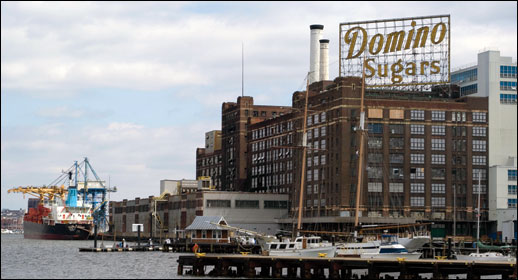
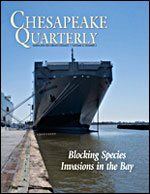
Global shipping is the prime mover behind most aquatic invasions. Chesapeake Quarterly, Maryland Sea Grant's quarterly magazine, reports on research, extension, education and other Chesapeake Bay issues and activities of interest to the marine community. It is produced and funded by this program, which receives support from the National Oceanic and Atmospheric Administration. Managing Editor, Sandy Rodgers; Contributing Editors, Jack Greer and Michael Fincham; Science Writers, Erica Goldman and Jessica Smits.
more . . . about A Question of Ballast
Skeptics question whether an invasive species has ever really caused significant ecological damage in the Chesapeake Bay. The answer is yes. We called it MSX. Chesapeake Quarterly, Maryland Sea Grant's quarterly magazine, reports on research, extension, education and other Chesapeake Bay issues and activities of interest to the marine community. It is produced and funded by this program, which receives support from the National Oceanic and Atmospheric Administration. Managing Editor, Sandy Rodgers; Contributing Editors, Jack Greer and Michael Fincham; Science Writers, Erica Goldman and Jessica Smits.
more . . . about Killer from across the Sea
Ballast water isn't the only way that non-native species move from place to place. A grab bag of non-native species - zebra mussels, snakeheads, didymo, water lettuce and nutria - lives in the Chesapeake and its tributaries. Chesapeake Quarterly, Maryland Sea Grant's quarterly magazine, reports on research, extension, education and other Chesapeake Bay issues and activities of interest to the marine community. It is produced and funded by this program, which receives support from the National Oceanic and Atmospheric Administration. Managing Editor, Sandy Rodgers; Contributing Editors, Jack Greer and Michael Fincham; Science Writers, Erica Goldman and Jessica Smits.
more . . . about Pathways for Invasions
The Chesapeake Region is aiming to position itself as a leader in the biofuel arena. Chesapeake Quarterly, Maryland Sea Grant's quarterly magazine, reports on research, extension, education and other Chesapeake Bay issues and activities of interest to the marine community. It is produced and funded by this program, which receives support from the National Oceanic and Atmospheric Administration. Managing Editor, Sandy Rodgers; Contributing Editors, Jack Greer and Michael Fincham; Science Writers, Erica Goldman and Jessica Smits.
more . . . about Navigating Ballast Water Management
Hydrilla has been confusing scientists ever since it arrived in America. An invasive species now found in 30 states, hydrilla is native to countries in the Indian Ocean region. Chesapeake Quarterly, Maryland Sea Grant's quarterly magazine, reports on research, extension, education and other Chesapeake Bay issues and activities of interest to the marine community. It is produced and funded by this program, which receives support from the National Oceanic and Atmospheric Administration. Managing Editor, Sandy Rodgers; Contributing Editors, Jack Greer and Michael Fincham; Science Writers, Erica Goldman and Jessica Smits.
more . . . about Travels with Hydrilla
There are thousands of other non-native species that could come to the Chesapeake Bay. Chesapeake Quarterly, Maryland Sea Grant's quarterly magazine, reports on research, extension, education and other Chesapeake Bay issues and activities of interest to the marine community. It is produced and funded by this program, which receives support from the National Oceanic and Atmospheric Administration. Managing Editor, Sandy Rodgers; Contributing Editors, Jack Greer and Michael Fincham; Science Writers, Erica Goldman and Jessica Smits.
more . . . about The Ecological Numbers Game