|
Pfiesteria, Karlodinium and Other Harmful Dinoflagellates
When Pfiesteria piscicida roared into the public consciousness in 1997, harmful blooms became dinnertime conversation in households across the country — practically overnight. But Pfiesteria's place in the spotlight often overshadows the reality that harmful algae pose a much bigger problem than this one, enigmatic, dinoflagellate.
Harmful algal blooms (HABs) of certain dinoflagellates, diatoms, and cyano bacteria can cause a host of environmental and human health problems, from fish kills to toxic seafood. Eating shellfish and fish contaminated by toxic dinoflagellates or diatoms can cause a number of serious conditions which can produce symptoms that range from mild cramps, vomiting, and diarrhea to moderate or severe neurological effects and even death. So far none of these toxic organisms has caused big problems in the Chesapeake Bay.
Other algal blooms are considered harmful, but not toxic. These organisms can cause brown tides and fish kills, but generally do not affect human health directly.
Federal and state agencies maintain forecasting systems that rely on satellite imagery, field observations, and buoy data to map bloom location and movement. This helps managers provide timely information to the public and mitigate the effects of HAB events.
For More Information
Background
- Woods Hole Harmful Algae Page
- www.whoi.edu/redtide
- Toxic & Harmful Algal Blooms
- www.bigelow.org/hab
- Harmful Algal Blooms in Maryland
- www.dnr.state.md.us/Bay/hab
- Extreme Natural Events: Harmful Algal Blooms
- www.cop.noaa.gov/stressors/extremeevents/hab
- Pfiesteria: A Selected Bibliography
- www.mdsg.umd.edu/Pfiesteria
Forecasting
- HAB Forecasting
- www.csc.noaa.gov/crs/habf
The Pfiesteria Story
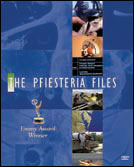
For an in-depth look at what happened in the Pocomoke ten years ago, order a copy of our Emmy-Award Winning film, The Pfiesteria Files, just released on DVD. The first glimpse that scientists had of this infamous organism set off alarms among fishermen and scientists alike and caused an outbreak of competitive media coverage by newspapers and television reporters that helped add to a mounting public hysteria. The Pfiesteria Files offers a fascinating look at a complex ecological problem, a biological mystery story whose ending has yet to be told.
You can order a copy of the DVD ($29.95) through our online store, www.mdsg.umd.edu/store (credit cards accepted), or by phoning 301.405.6376.
|


![[Maryland Sea Grant]](/images/uploads/siteimages/CQ/MD-Logo.png)